Filter by topic and date
New features for RFC-Editor.org
- Alexis Rossi RFC Series Consulting Editor
30 Sep 2026
New features implemented on RFC-Editor.org aim to make the site more useful and engaging for RFC consumers.
The new RFC Editor website, launched four months ago, aims to address the needs of RFC consumers with faster, more comprehensive searching of RFCs, updated presentation of RFCs for an improved reading experience, and better site accessibility for people with visual impairments.
Additional features are being launched today to provide more capabilities useful to RFC consumers, enabling new ways to find, organize, and engage with RFCs. Some of the new features require creating an account.
The latest round of improvements are being shared now with the goal of gathering community input. Some features may be updated or altered based on the feedback received.
RFC subject tags
The long-standing RFC Production Center practice of tagging RFCs with keywords makes it easier to find RFCs related to a particular topic or technology, but some older RFCs lack keywords and the topics have never been applied in an organized manner. The new subject tags on RFCs aim to help readers find related RFCs in a more structured way. The design principles for the subject tags, the full taxonomy, and the code used to generate them can be found in a dedicated GitHub repository, which includes a separate tag browser that allows you to examine the taxonomy in detail. Issues with the tags can be raised directly in that repository.
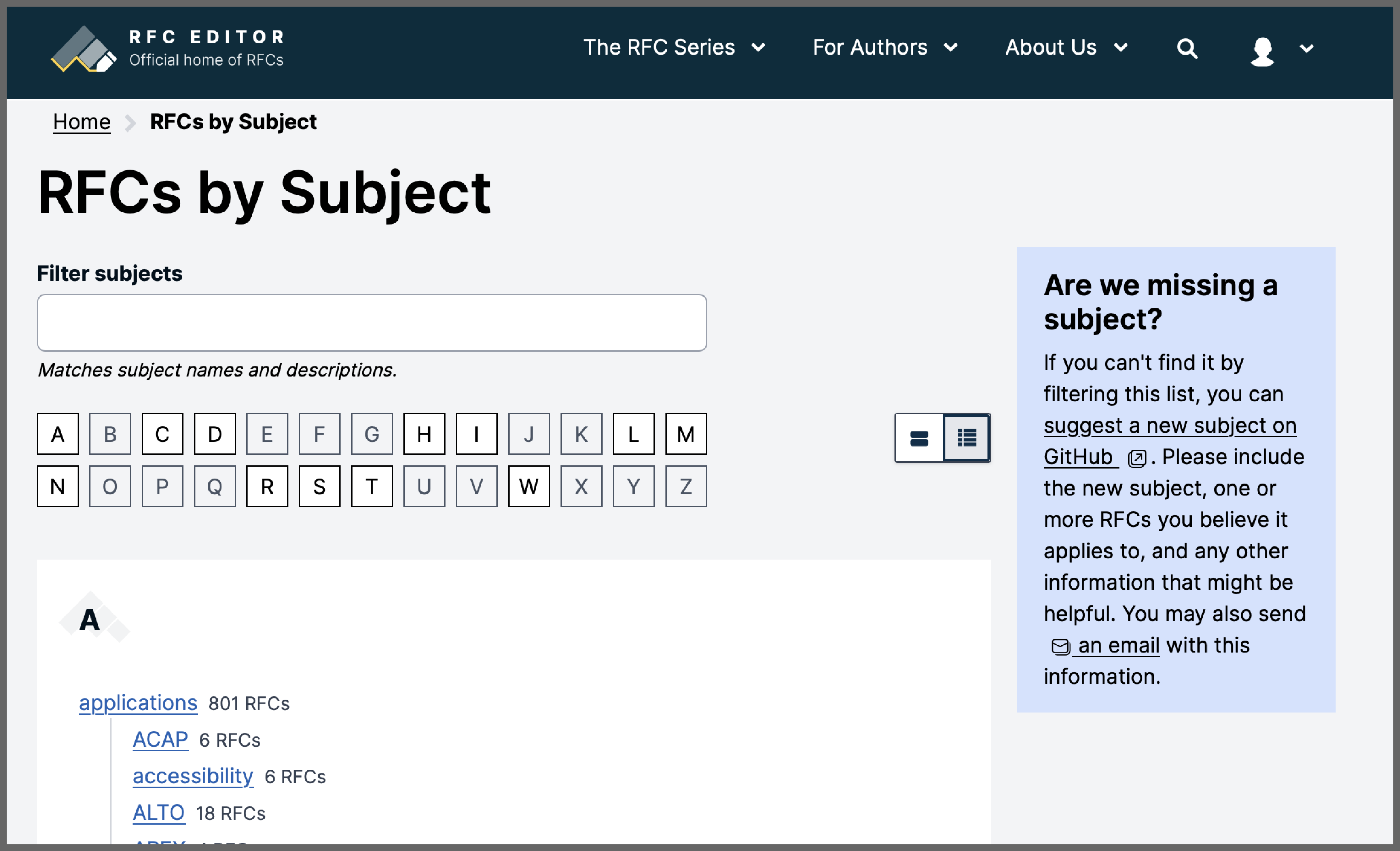
Accounts
Some of the new features on RFC-editor.org require an account at account.ietf.org. For the moment, these accounts are separate from the IETF Datatracker accounts, though there is a plan to merge these in the future. RFC-editor.org readers who do not use Datatracker will not need to take any other actions when that merge occurs.
RFC sets
Logged-in website visitors now have the ability to create and share personal sets of RFCs to organize them within their accounts.
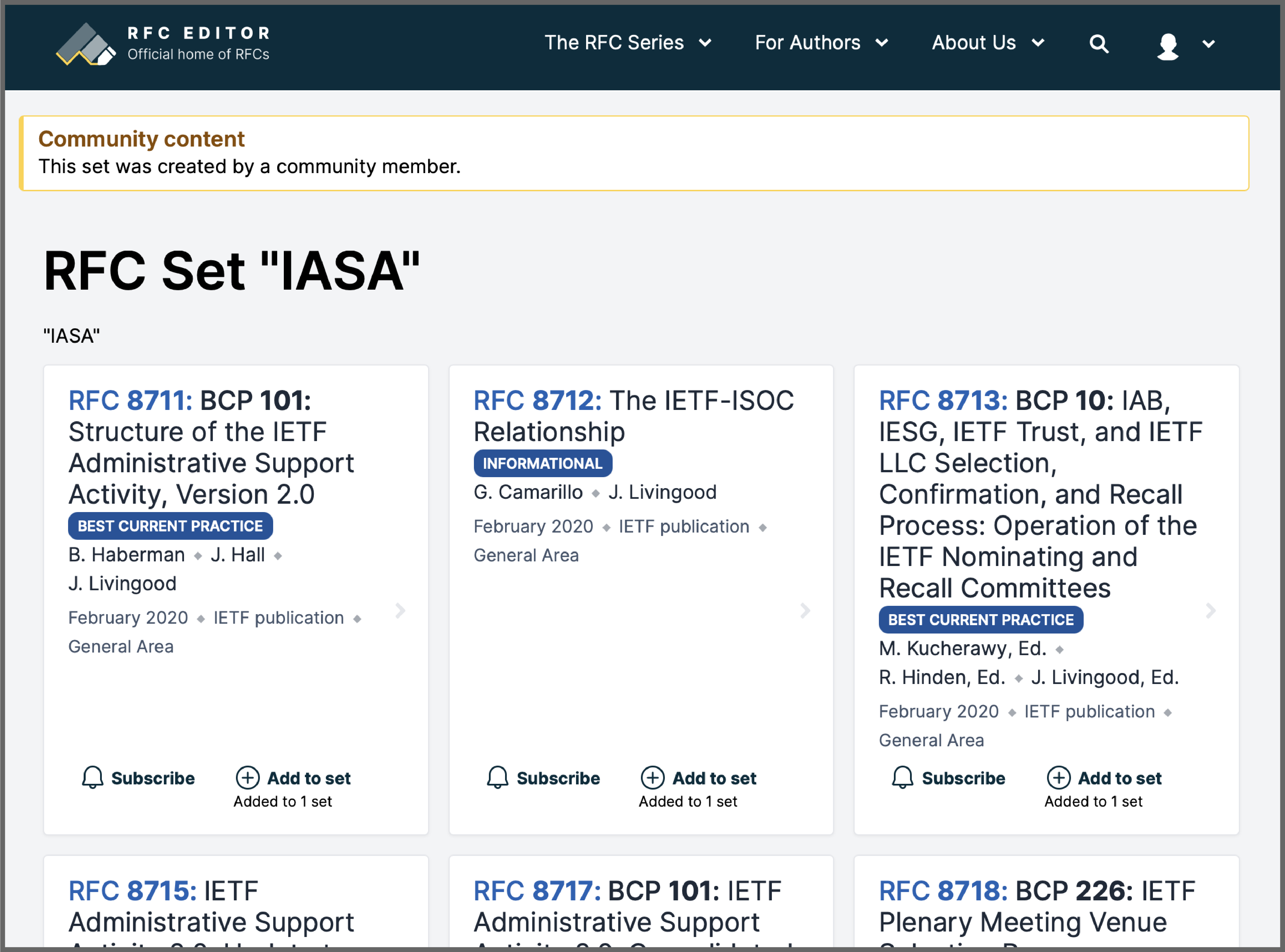
Notifications
Visitors with accounts can subscribe to RFCs or subject tags to receive notifications about changes, errata, and newly published RFCs. Notifications will appear on account pages and via email digests.
Ratings
As a first step towards engaging RFC consumers more generally, visitors can apply personal ratings to an RFC and view aggregate ratings when they exist.
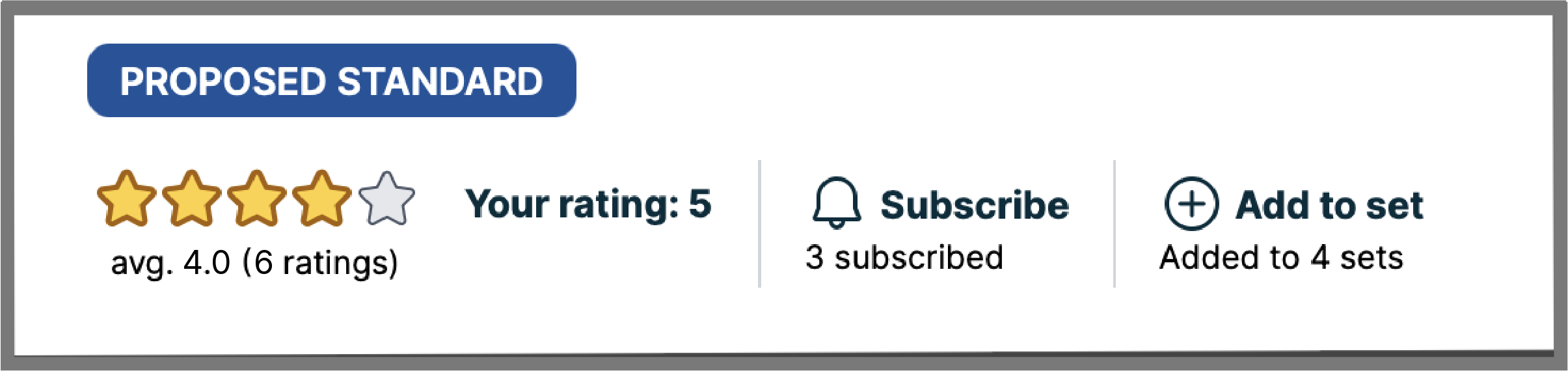
Surveys
To gather data that will help improve the website, pop-up surveys will be offered to some visitors, asking simple questions about the site in general or about a specific RFC.
Popularity (future feature)
A feature not launched today but expected to be available in the near future will highlight RFCs that are of particular interest at the moment. This feature will build on data related to an RFC, including anonymized and aggregated page view numbers. This feature is currently being tested and validated; once it is publicly available we expect broader use will help refine it further.
Each of these features is being shared now with the aim of collecting feedback for whether and how they improve the usefulness of the website for RFC consumers. We expect them to evolve based on feedback, which is encouraged by submitting an issue to the website’s GitHub repository.
This initiative is funded by the Internet Corporation for Assigned Names and Numbers (ICANN) through the ICANN Grant Program.